


When Interfaces Carry the Outcome in Advanced Packaging
Advanced packaging flows are running with more precision and control than ever. Yet outcomes such as yield, performance, and long-term reliability do not always map neatly back to a single cause.
More often, they build over time, with small upstream conditions carried forward until they finally show up at the interface. This is where outcomes are ultimately decided.
These situations tend to follow a familiar arc.
A flow is qualified. Materials are within spec. Processes are stable. Nothing appears out of place step to step. But something does not fully hold at the end. Electrical results drift, or reliability does not behave as expected under stress.
Working backward typically does not reveal a single issue. Instead, it exposes a sequence of small contributors, such as a surface condition that was slightly off, a material interaction that did not fully resolve, or an exposure step that seemed inconsequential at the time.
Individually, none of these would be expected to define the outcome. Taken together, they do. What connects these cases is not the specific process step. It is where those conditions ultimately reside and persist.
Where? At the interface.
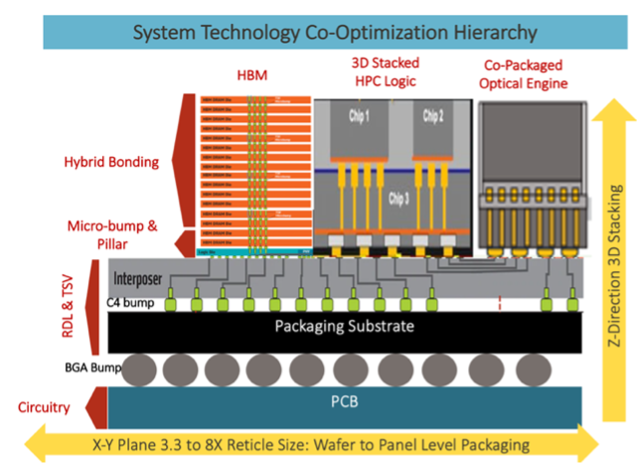
Interfaces are often treated as discrete events. Two surfaces meet, a bond forms, and the process moves forward. In practice, they behave less like moments and more like carryover points.
They reflect the full condition of the surfaces that created them, including material state, prior exposure, and environmental history. Once formed, they tend to preserve that condition rather than correct it. In many advanced packaging flows, there is little opportunity for recovery after that point. Over time, that accumulation becomes visible. The interface no longer just reflects the process. It begins to carry the outcome.
A number of familiar challenges begin to align.
-
Surface exposure during handling is not just about avoiding visible defects. It shapes the condition of surfaces that may later define critical interfaces.
-
Material delivery is not only about consistency at dispense. It can introduce problematic features, even at very small scales.
- Process conditions do not just determine immediate results. They leave behind a surface state that becomes the starting point for what follows.
None of these are new considerations. What changes is how directly they converge once the interface is formed.
This becomes more noticeable as underlying conditions scale. There are more interfaces within each package, increasing the likelihood that one carries a subtle issue. Many of these interfaces are less tolerant of variation, particularly where bonding depends directly on surface condition. Interfaces are also increasingly influenced by what happened earlier, before they were ever formed.
In that environment, contributions that might once have been absorbed or averaged out, such as trace contamination, minor surface variation, bubble generation, or subtle material interactions, are more likely to persist. They may not create immediate defects. More often, they remain part of the interface until they are revealed later under electrical, thermal, or mechanical stress.
Looking at advanced packaging, this way does not replace how yield is managed. The same fundamentals still apply. Materials control, process discipline, and defect reduction remain foundational to device performance. What it adds is a way to connect those fundamentals across steps, particularly when cause and effect do not align cleanly.
Instead of asking only whether each step performed as expected, it introduces a related question: What condition is being carried forward, and where will it eventually matter? Interface integrity becomes less about the quality of a bonding step, and more about how consistently conditions are preserved across the flow leading into it.
Materials, handling, and process environments form a continuous pathway that shapes interface conditions over time that forms a pathway concentrated in a few areas that are not always considered together:
-
How materials reach the point of use, including filtration, fluid handling, and the stability of chemistry from manufacturing through delivery to the tool
-
How surfaces are exposed and transferred, particularly during handling, storage, and movement between steps
- How environments are controlled between processes, from airborne contamination to electrostatic conditions and unintended interactions
Individually, each of these is well understood and actively managed. What changes is the perspective. They are no longer independent considerations but connected parts of how interface conditions are established and preserved. improvement does not require a new set of controls. It depends on making these connections more deliberate so that what arrives at each interface is more predictable.
The interface integrity approach connects materials, handling, and environments into a continuous system so that interface conditions are engineered, not left to accumulate.